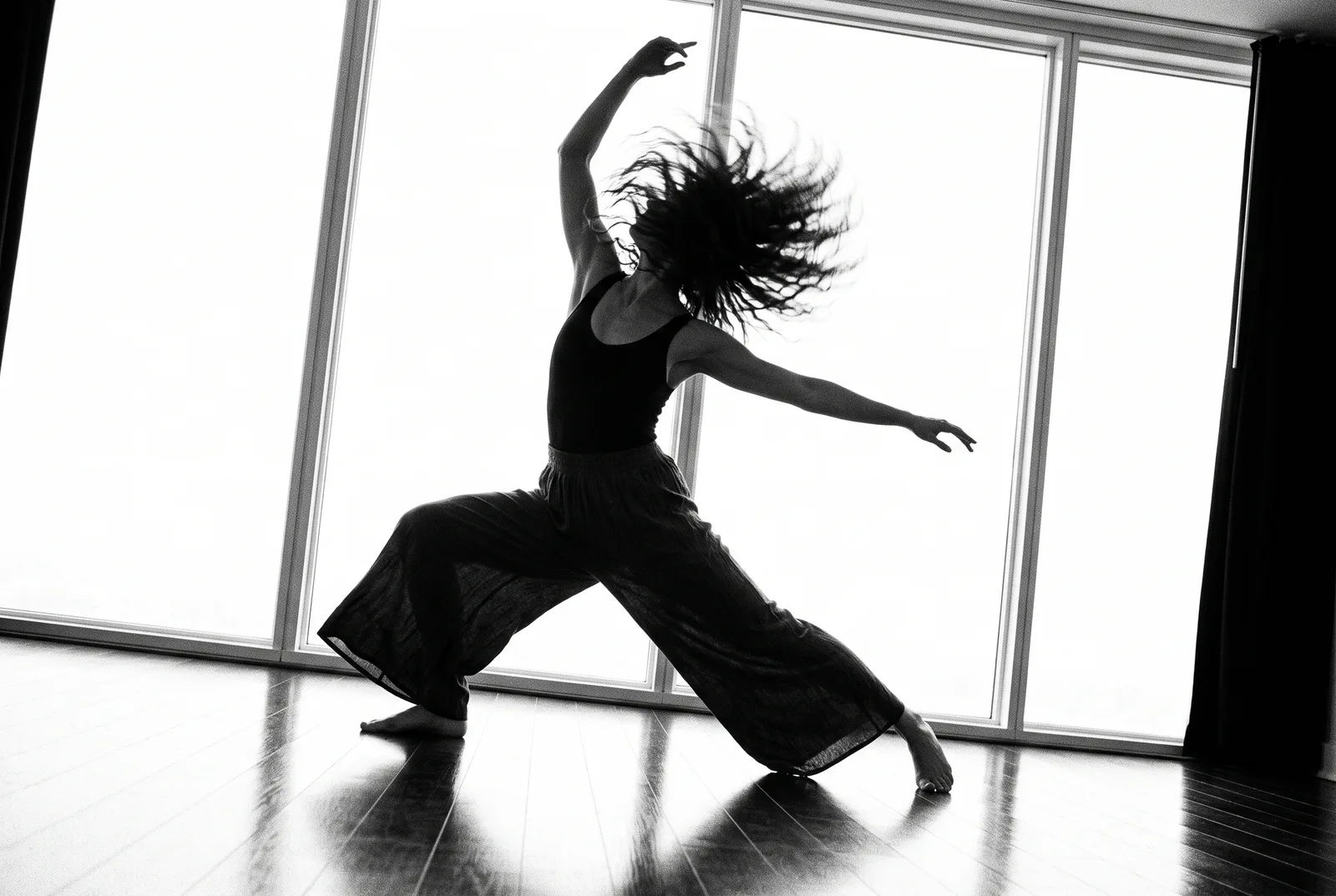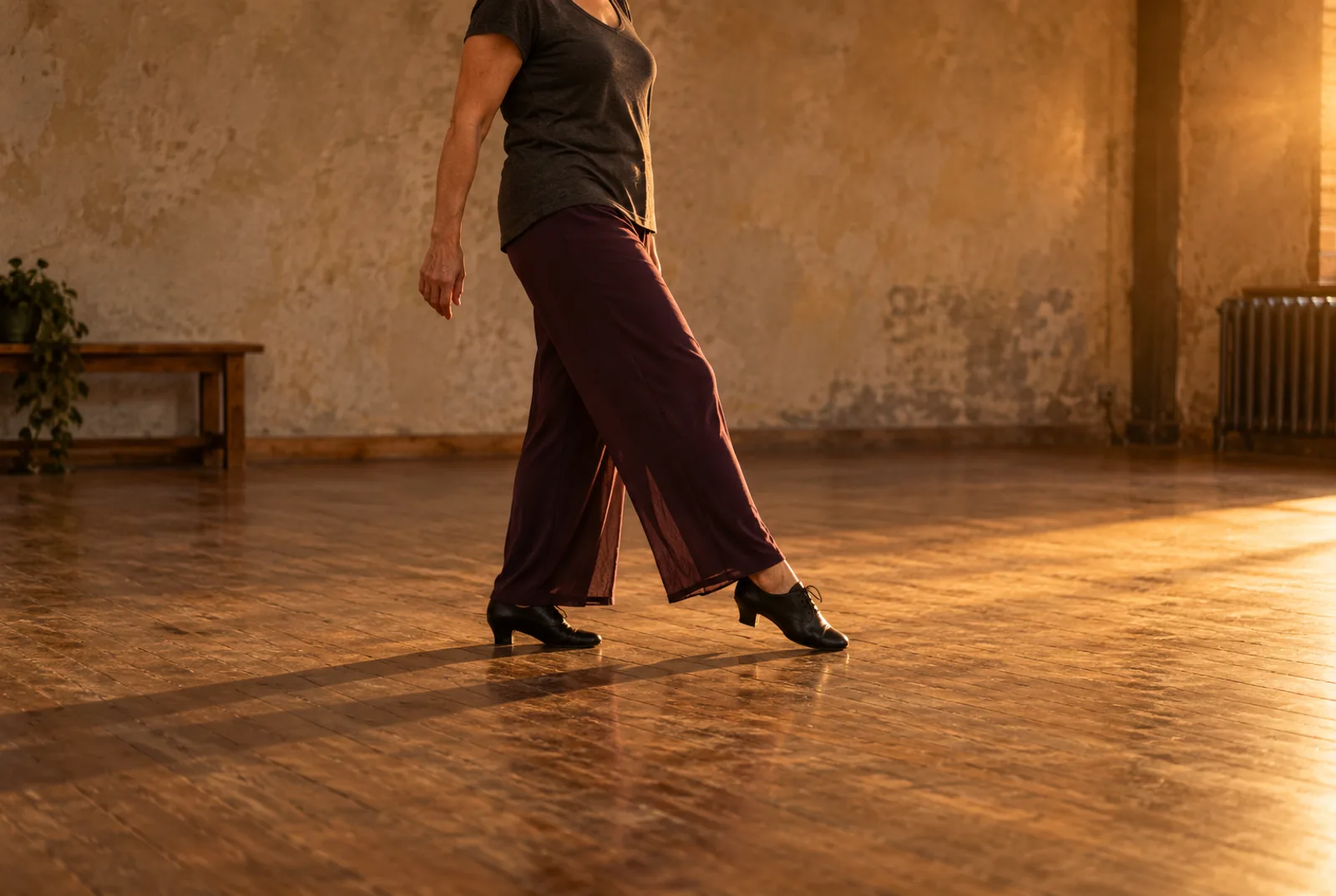
Heels dance
New to heels dance in your 30s, 40s and beyond
You pause over a class page, interested right up until you picture walking into the room. Would everyone else have started years ago? At 34, 46 or 58, would you spend the whole evening trying to catch up? I’d separate those worries before you let them decide for you. Your age tells me how many birthdays you’ve had. It doesn’t tell me whether you’ve learned choreography, danced in heels or stepped into a studio before. Those are much more useful starting points.
Your birthday doesn’t tell me your starting point
If you’re beginning for the first time, you deserve an explanation of the basics without having to apologise for needing it. That remains true in your thirties, your forties and beyond. You haven’t missed the introductory chapter because you’re an adult. You’re simply arriving at it now, with a perfectly reasonable wish to understand what you’re being asked to do.
Two women of the same age might need quite different instruction: one has never followed a dance combination; the other danced for years and is trying heels for the first time. Calling both of them “too old” would tell us nothing about the teaching either needs. I’d much rather know what feels familiar and what you’d like someone to explain.
Returning after a break deserves its own bit of honesty. Perhaps you recognise counts and dance terms, but haven’t moved through a taught routine in years. That history belongs in the conversation. So does the gap. You don’t have to choose between pretending you’ve forgotten everything and expecting yourself to resume exactly where you stopped. Tell the teacher what you did, roughly how long ago, and whether heels themselves are new.
If you danced as a child, your old class level needn’t become today’s assignment. A useful return might involve revisiting something you recognise at a pace that lets you try it properly. Equally, if you never danced as a child, there’s no missing qualification you must somehow make up before you can begin learning as an adult.
I’d start with what you want from dancing now. Perhaps you’d like to learn a routine to music you love, or try a style you’ve admired for ages. Neither ambition needs an imaginary younger version of you to have enrolled first. Let the woman who is interested today have a say.
Give yourself time to understand the movement
Once you’ve separated age from experience, you can be more precise about pace. Imagine being shown a short combination and missing the start. You might need to see which foot goes first, or have the direction explained before adding the music. Those are answerable questions. “Am I too old for this?” gives a teacher much less to work with.
I’d rather you ask for the part you need than spend the next attempt blaming your age. “Could you show me the first step again?” is enough. A pace that suits you leaves room to understand the instruction and attempt it. Needing that room in your forties isn’t a reason to feel embarrassed about being a learner.
At Femme & Soul, we teach choreography from the fundamentals up, in small pieces, paced for the women in the room. Our Limerick Absolute Beginners Fundamentals course starts from zero; Beginner Heels is for women with a little experience. Cork’s entry point is Beginner Heels Fundamentals Cork. Those distinctions are useful when you’re looking for beginner heels classes as an adult: your starting knowledge helps identify the course, without making your age the whole conversation.
You can start in socks; heels are optional at the beginning. If the style appeals but the shoes feel like another unfamiliar thing to manage, you can tell us that too. You don’t need to arrive with every part of the experience already sorted. I’d rather have an honest starting point than an impressive answer you feel obliged to live up to.
You’re allowed to take time over something you’ve never learned before, even when you’re used to being the woman who knows what she’s doing.
Your individual health needs still matter. If an injury, a health condition or a return after surgery leaves you unsure about suitable movement, ask your GP or physiotherapist for advice and tell the teacher about relevant restrictions. Stop if you feel sudden pain or dizziness. Needing a movement explained and needing medical guidance are different situations; a birthday alone doesn’t settle either one.
Measure the part you’re learning
With a suitable starting point, you can give progress a fairer meaning. I wouldn’t set a deadline for looking polished because you’ve begun at 35 or 45. You’re learning the material in front of you. An early aim could be recognising the opening of a routine, or knowing where to begin when the teacher starts the music. That’s something specific you can notice.
A polished social-media routine can be lovely inspiration. It doesn’t tell you what instruction the dancer needed, how familiar the sequence is, or how that attempt relates to your starting point. You can enjoy watching without making the clip your assessment. The same goes for a dancer who trained through childhood. Her experience is information about her practice, not a deadline you failed to meet.
A more useful comparison is with your own earlier attempt at the same passage. Perhaps you previously needed the first step demonstrated and now recognise it. You might still need help further along. Both observations can sit together. You don’t have to dismiss the part you’ve learned because there’s another part you’re still asking about, or turn one good attempt into a promise about next week.
Our blocks revisit one choreography with the same group: six weeks in Limerick, with one 60-minute class each week, and four weeks in Cork, with one 90-minute class each week. That gives you repeated opportunities to work with familiar material. It isn’t a timetable for mastering the style. Finishing a block and deciding you’d like more time with fundamentals is a reasonable learning choice.
Being an adult beginner also means you get to decide what makes the practice worthwhile. You can care about doing a step well without wanting a camera-ready performance. If you enjoy the music and want to understand a little more next time, that is a perfectly sensible reason to continue.
Ready when you are
If you’ve been browsing heels dance classes in Ireland while wondering whether you’ve left it too late, try describing your experience instead of ruling yourself out. “I’m completely new” and “I danced years ago, but heels are new to me” give us somewhere useful to begin.
You can explore our Limerick courses and starting levels, including Absolute Beginners Fundamentals if you’ve never danced.
For Cork’s heels courses, the city page explains the entry course and lets you register interest in the next block. Tell us where you’re starting from and what you’d like to ask before joining. You can be curious and a little unsure at the same time.
Rita x